I realise its been a while since I’ve written a blog post. I tend to quickly add stuff to my social media accounts and my blog has been a little overlooked. My apologies.
If you follow my social media then you’ll have seen I had a disastrous wet plate collodion demonstration at The Museum of Craven Life in Settle a couple of weeks ago that really knocked my confidence. I was surprised by how much. I’ve been shooting wet plate for over 15 years now and it really goes to show its a process that can still bite you on the bum. Anyway, everyone who attended expressed how much they enjoyed it and there’s been excellent feedback despite the dreadful plates.
Lets put that behind us an move on 🙂
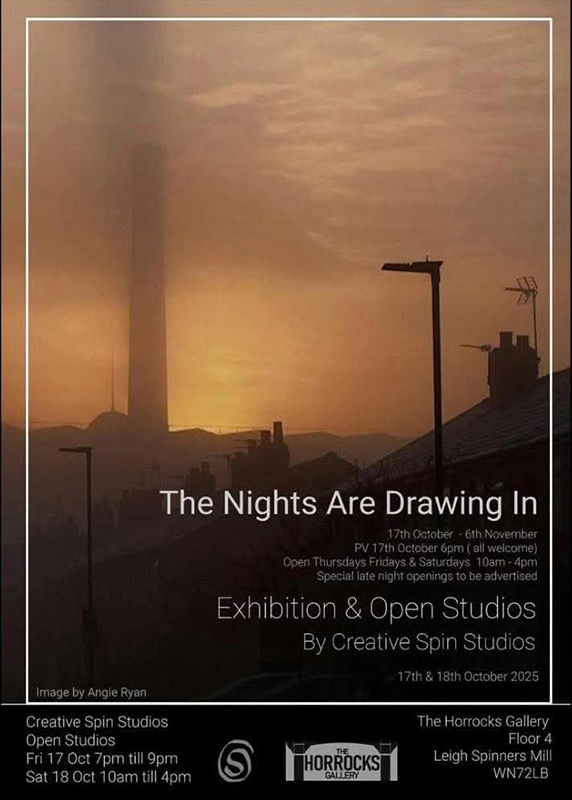
On Friday we had the opening of “The Nights Are Drawing In” exhibition at The Horrocks Gallery, 4th Floor of Leigh Spinners Mill. A group exhibition of creatives and artists from the 3rd and 4th floors of the mill and Creative Spin Studios.
I’ve been testing a supplier of large acetate negatives, up to A1 in size, for this exhibition and for another early next year at Stockroom in Stockport. An online supplier and relatively cheap. I spent a few weeks testing smaller acetate digital negatives and tweaking Adjustment Curves to consider contrast control in the final prints. Initially looking at cyanotypes but then additional curves for silver gelatine, salt, albumen and Van Dyke Brown printing.
I decided to make a print using open source data of the sun and its solar flares. Photography relies greatly on light and the lack of it can prove problematic. Again I don’t make thing easy for myself. A cyanotype is also known as a Sun Print so the two ideas come together really well. A cyanotype may take 10 – 20 minutes to exposure with summer sunlight but we are now into October and my exposures were around 2 hours and 30 minutes with the last of the UV on an autumn evening/afternoon. Needless to say many hours were spent trying to get the tone/density I was happy with. Some of this can be further adjusted with ph levels and chemistry in the developing wash water.
I had every intention of leaving it as a cyanotype, and originally pictured it in my head as a sole blue circular motif on a expanse of white. I just can’t help myself. I felt the need to bleach and tone them all.
I had bought a couple of large plastic oil drip trays, the type you’d sit under your classic car in the garage. These were just about the right size for an A1 sheet of paper. Paper was Daler-Rowney 200gsm Cartridge Bright White from Hobby Craft. A very affordable paper.
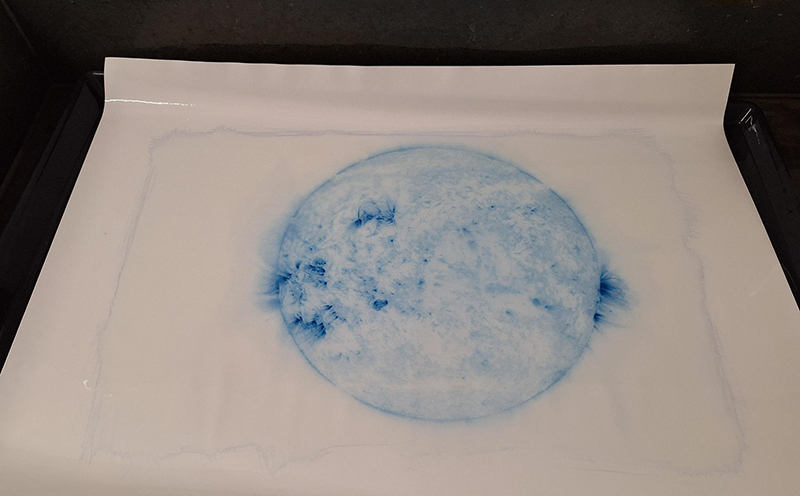
One other issue I hadn’t really considered was how to dry all these large sheets of paper. When coated with the sensitiser I just lay them in the plan chest drawers to dry over night, but when dripping wet from processing I had to “borrow” the clothes dryer from home… I did take it back afterwards but might get another for the studio after it proved so useful.
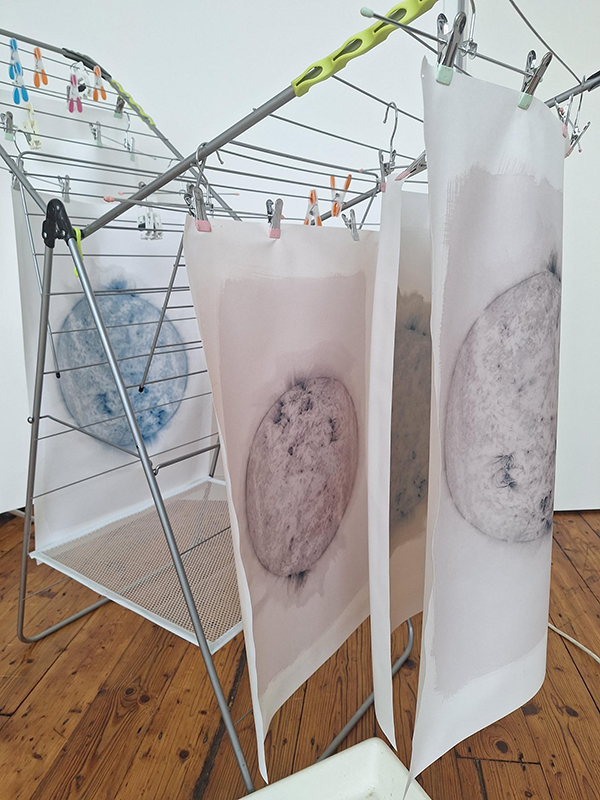
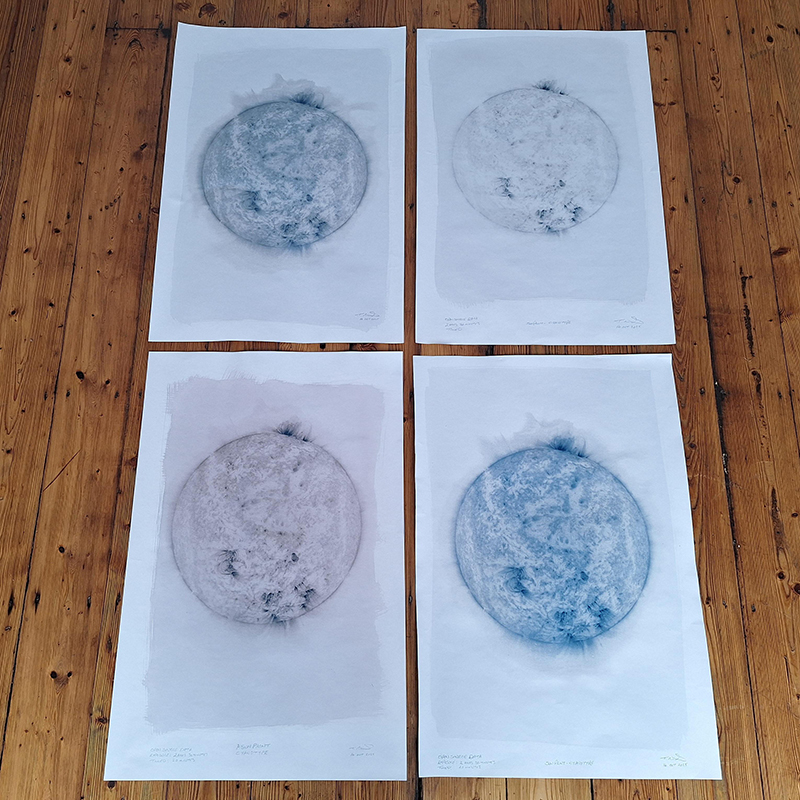
The cyanotype on a white expanse was my original thought but I when printed I wasn’t so keen. This one has been bleached back a bit.
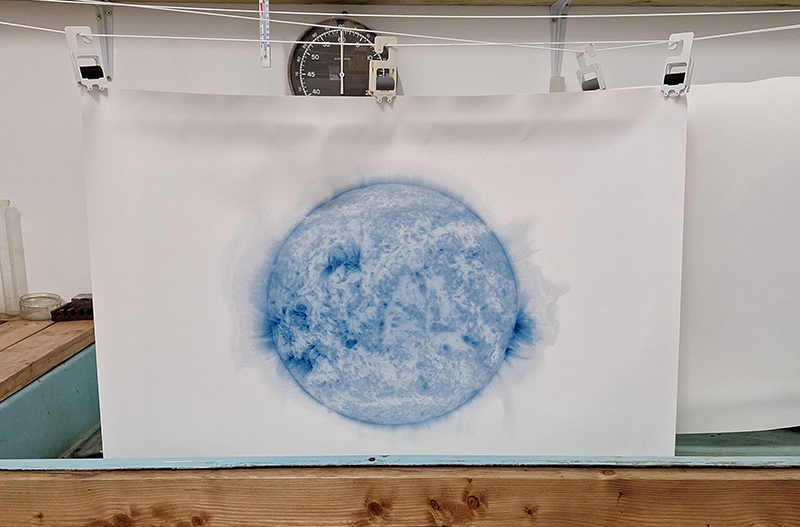
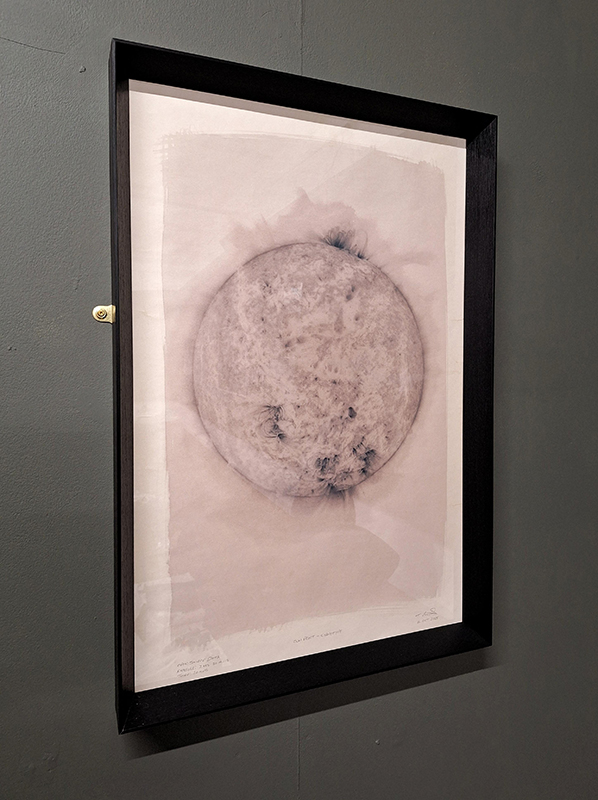
Here are four different versions. Bleached and toned with varieties green tea, tannic acid and coffee. The exhibited print is slightly bleached and and coffee toned. I quite like what I thought was an expanse of white became toned and added that little but more to he print as an additional border that seemed to ground and baclance it more.
I was pretty happy with the end result. Here framed in a 20×30 inch deep black frame.
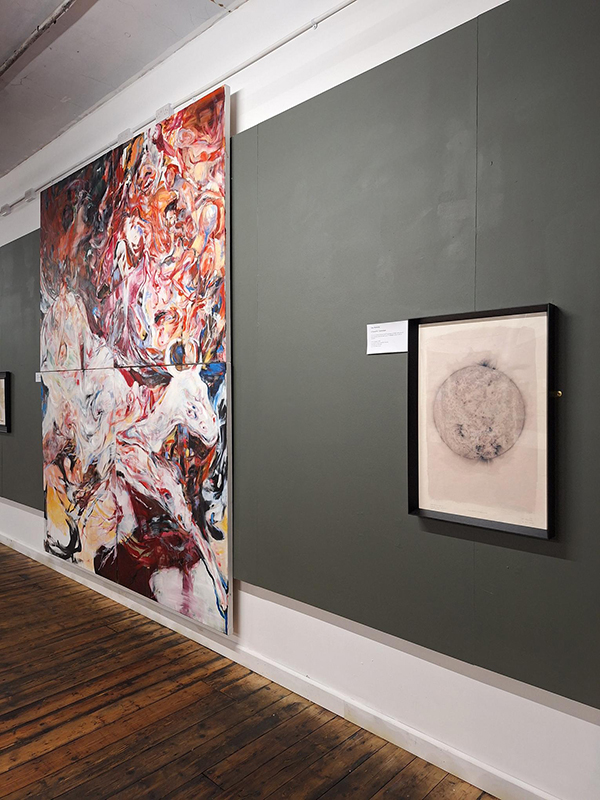
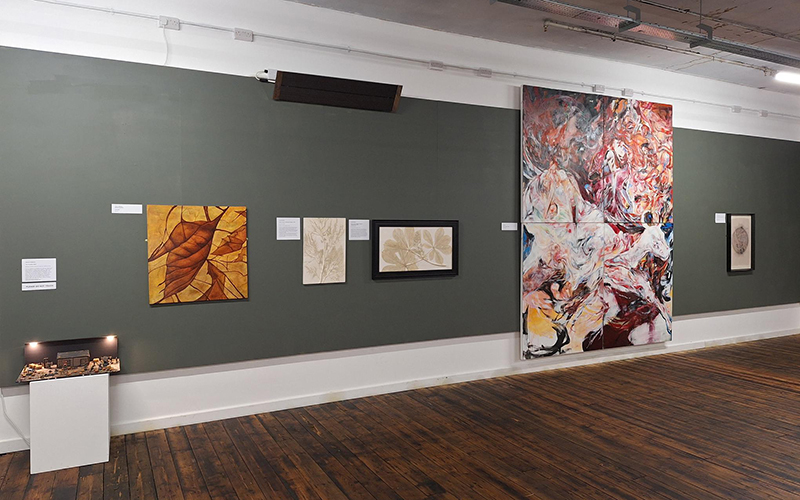
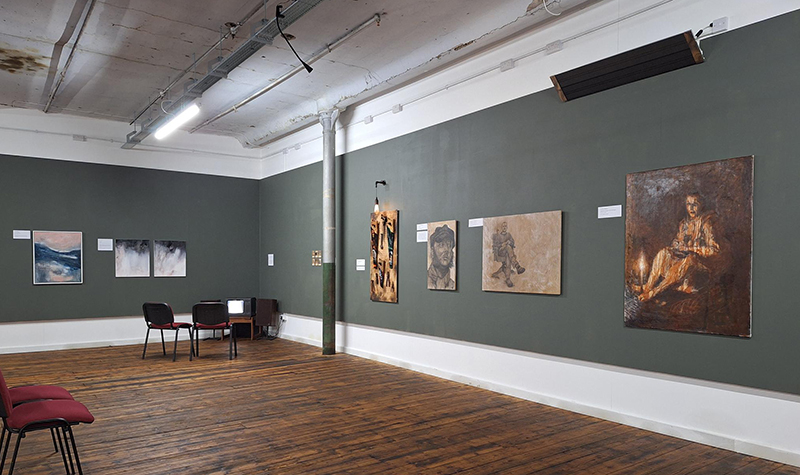
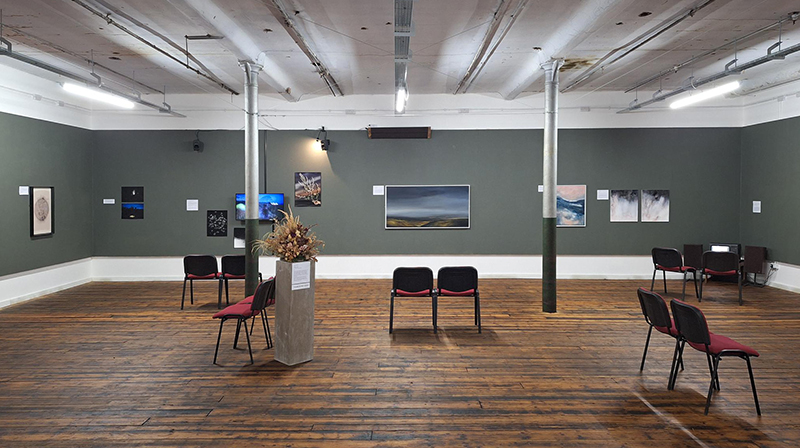
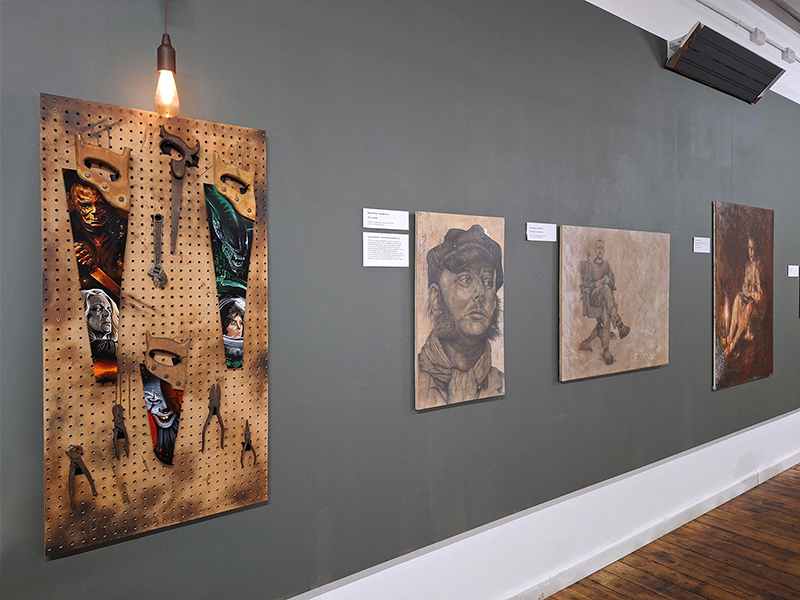
The opening night was a great success as it also included Open Studios. I sold two additional prints which is always a good thing.
It’s well worth a look. I’ll be invigilating tomorrow and Thursday next week so pop in and say Hi.