About a month ago Andy Moo Pa mentioned that he’d bought a 3D printer, and somehow, we have ended up here. There’s been a lot of bouncing ideas back and forth via Whatsapp, some sensible and some just a bit out there, but I think we’ve managed to get where we wanted to go and its been a bit of fun along the way. A simple 3D printed case for tintypes and ambrotypes, well any image really. Granted it could be a lot simpler and its only a nod in the direction of the Victorian originals.
We have to give Gregg McNeil a mention, as he sent me a resin formed Union case a couple of months ago. Although impressive that’s far too involved for us, so we looked for an easier option.
And this YouTube vid was also proved very helpful early on by Nik the Booksmith.
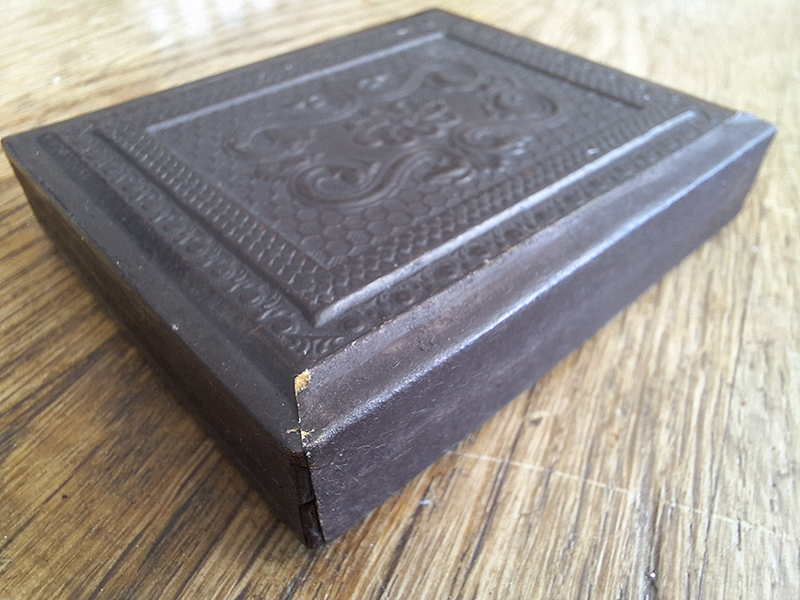
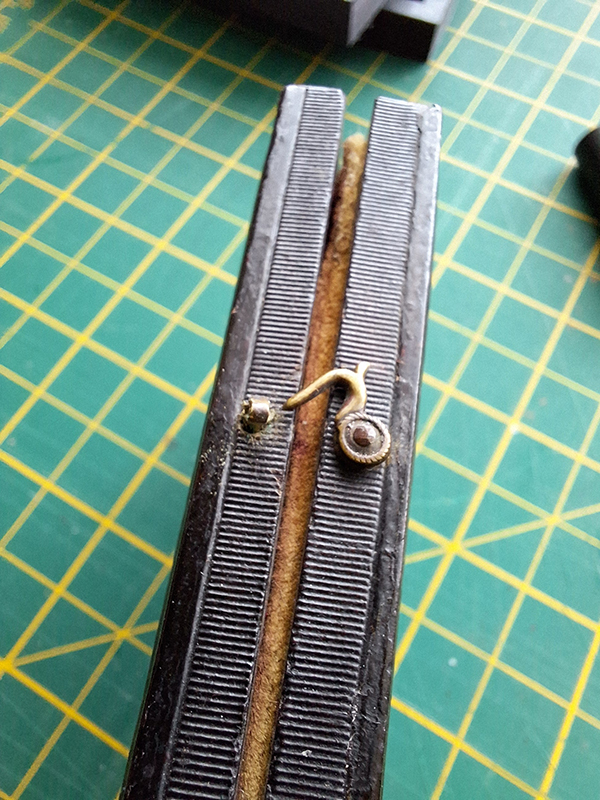
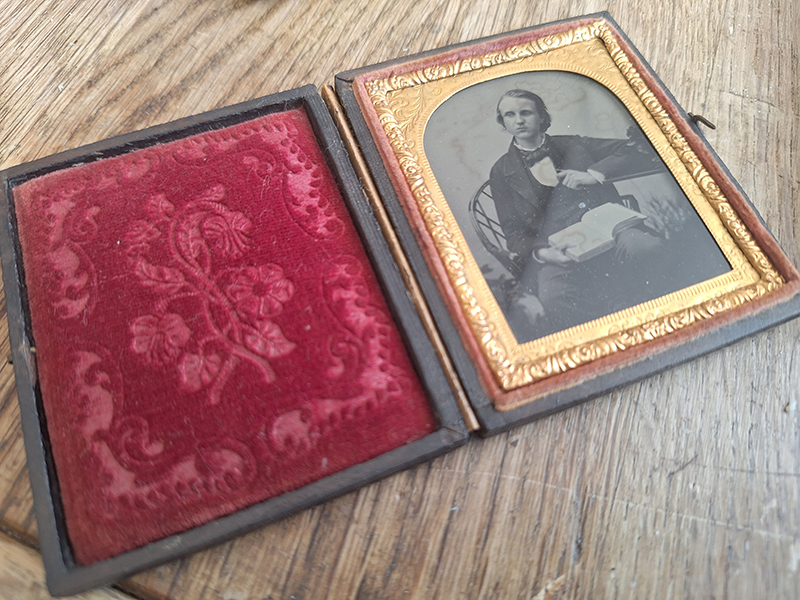
For reference here are some original cases using various materials, preservers, mounts, hinges and clasps.
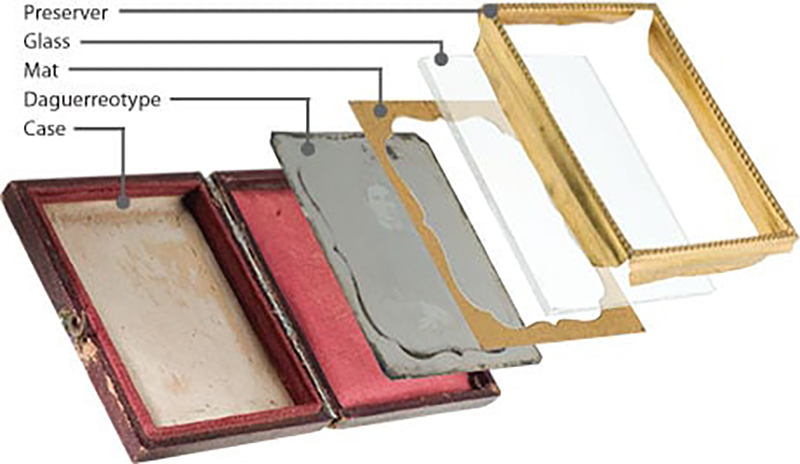
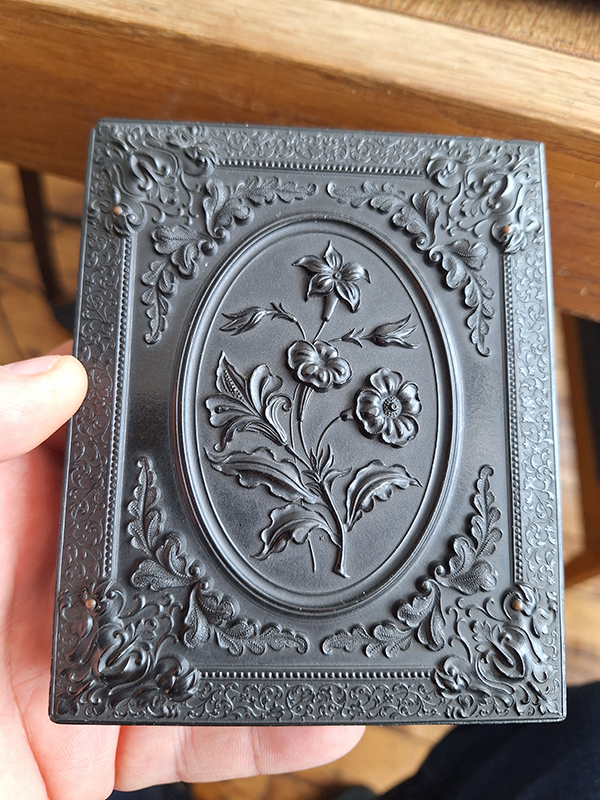
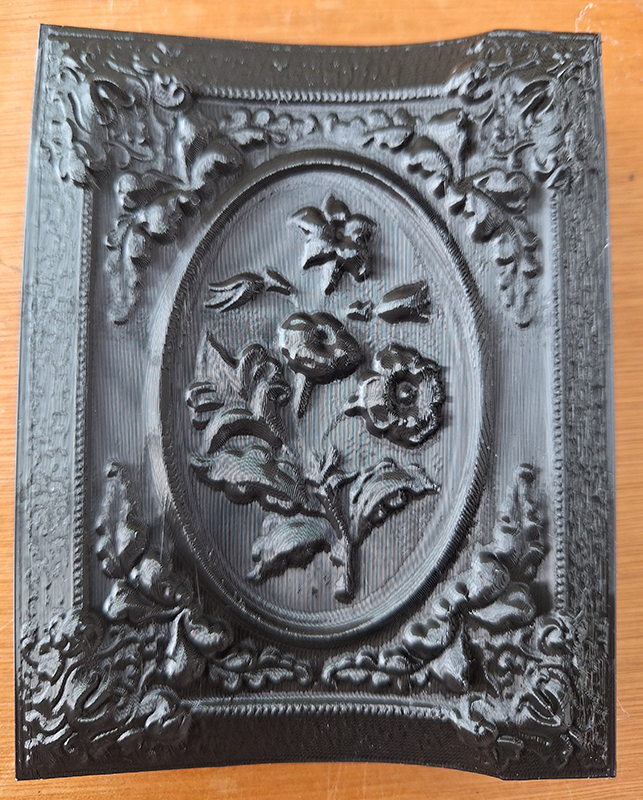
I did try to quickly 3D scan this hard case at work, you can see the result later… sort of.
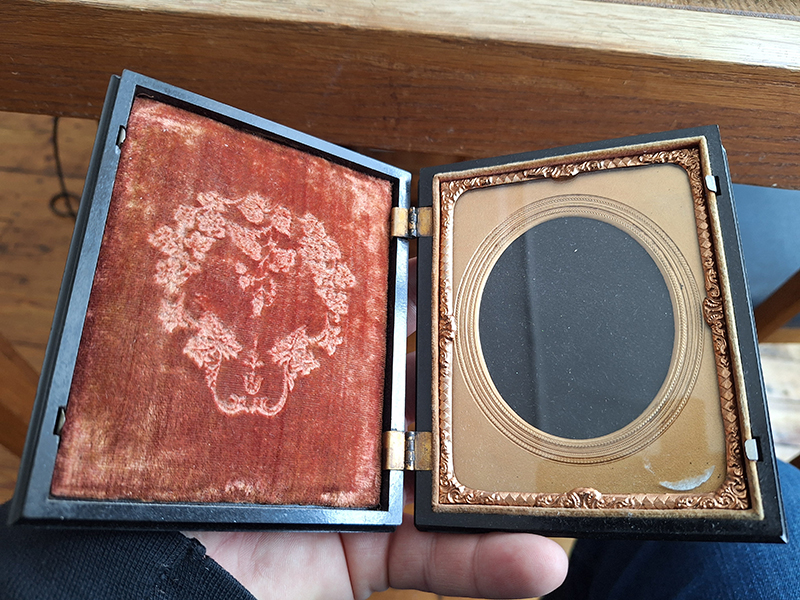
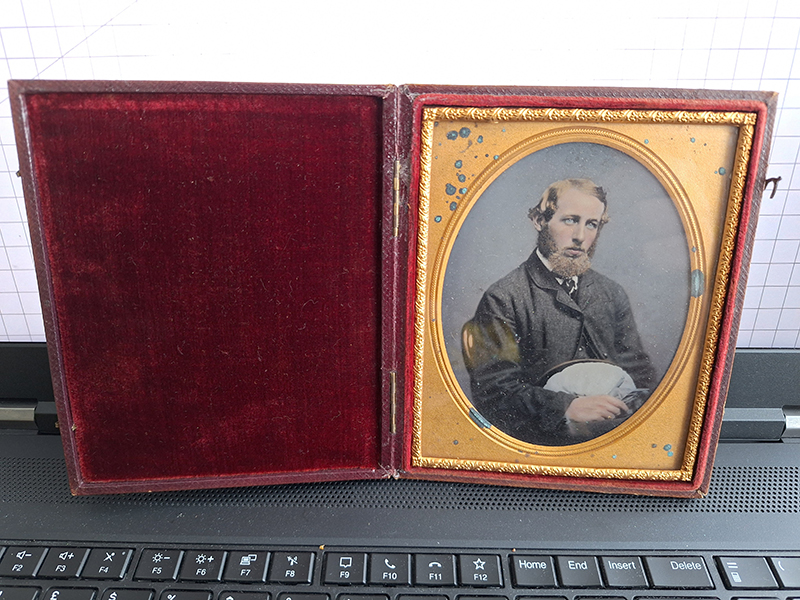
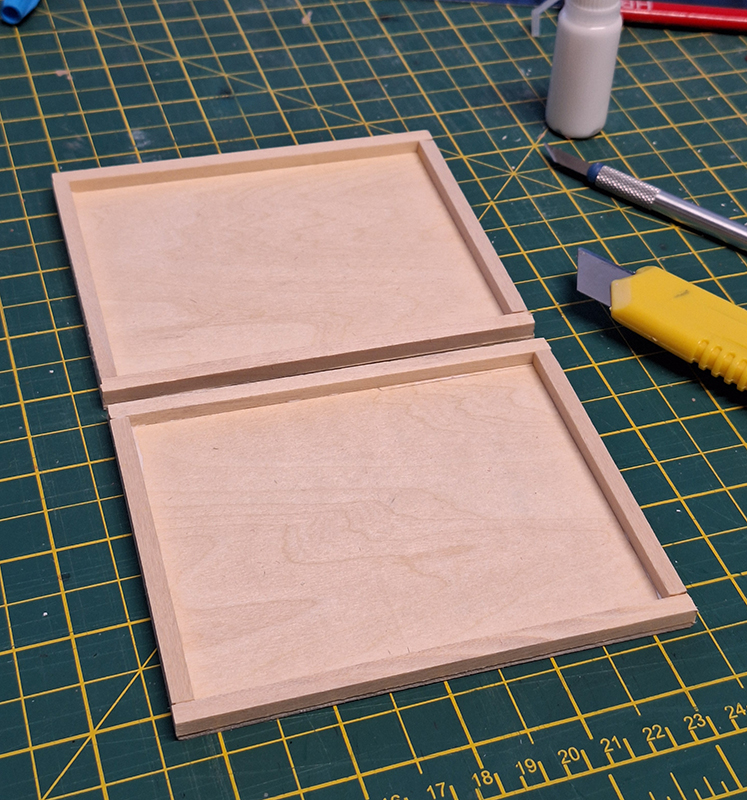
My first attempt with plywood sheet and 5mm square dowel. Just to give it a try. It was straightforward enough but it takes far too long to wait for the glue to dry and to make sure you have it all square.
The black book binding paper cloth is easily folded and cut to shape. And double sided sticky tape is so much easier and cleaner than working with contact adhesive.
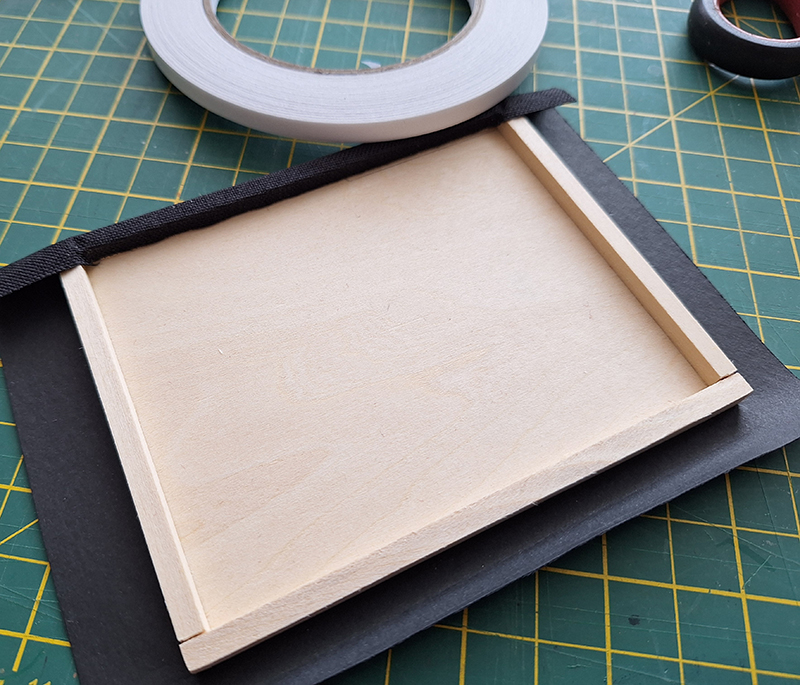
I only made the one wooden example, although really nice, it was time consuming and multiple versions whilst the glue dried would be a pain.
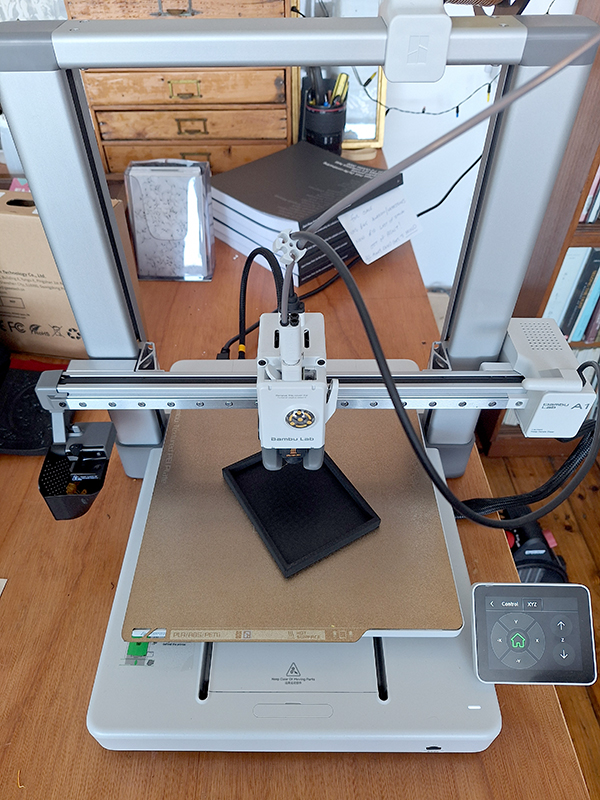
So, 3D printing was the obvious alternative. I have a Bambu Lab A1 printer which is dead easy to use and needs hardly any attention apart from some lubrication every few months, which the printer reminds me to do. It’s not put a foot wrong. Any errors have been due to the user.
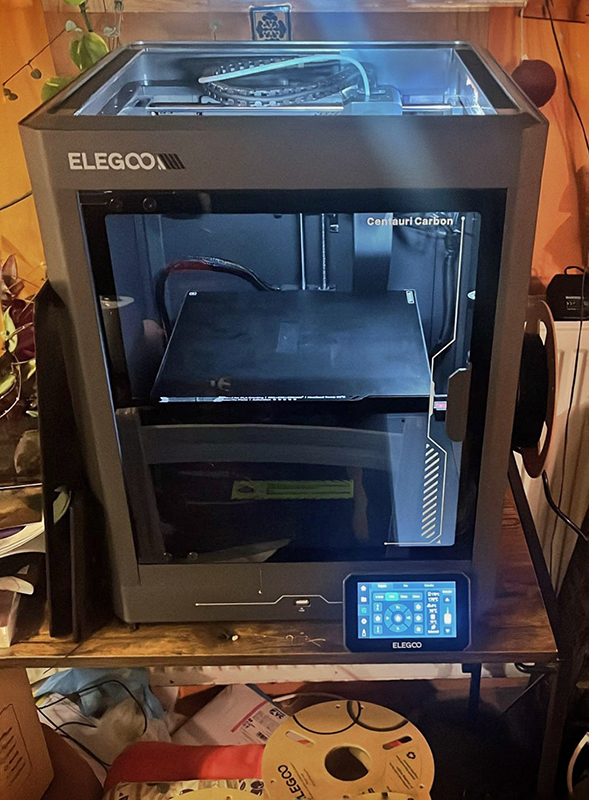
Andy Moo Pa has an Elegoo Centauri Carbon printer. The main differences being the Bambu A1 is a “bedslinger” and the Elegoo is an enclosed core xy system. There’s not much difference in price, both having their pros and cons.
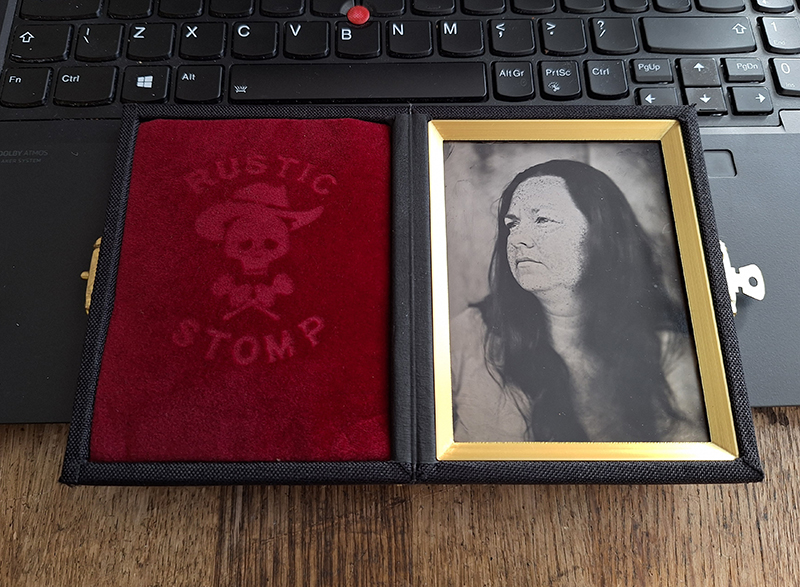
Moo Pa designed a standard half case for quarter plates. These can be left naked, and some might prefer that aesthetic, but I like the idea of covering mine. Moo Pa has dabbled with velvet casing but mine are black bookbinding cloth.
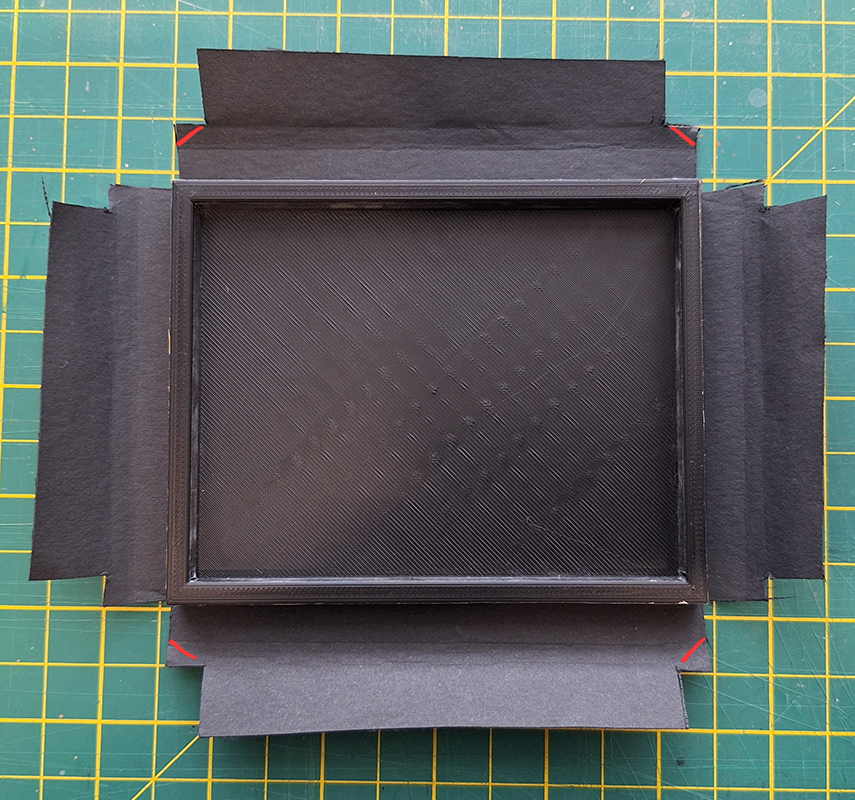
Getting the folds correct with minimal overlap of excess material was a challenge but I’m happy with where I’ve got it so far. I’m open to suggestions. The highlighted red areas above were the final adjustments.
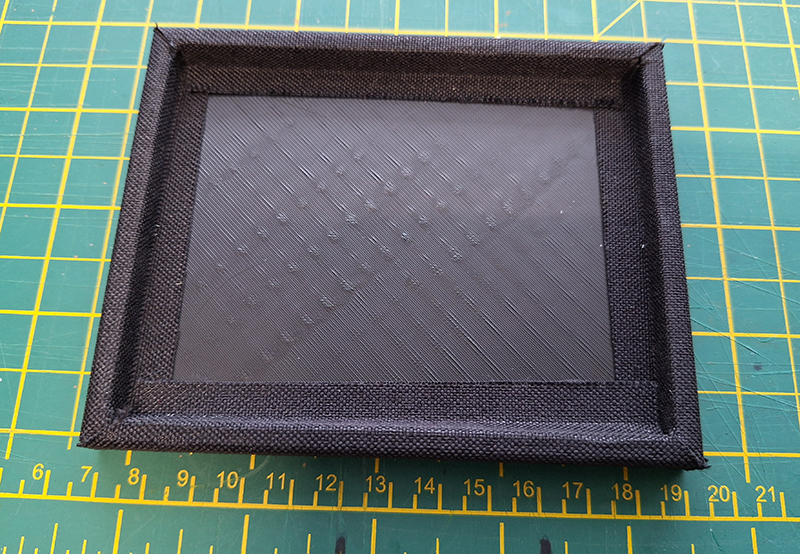
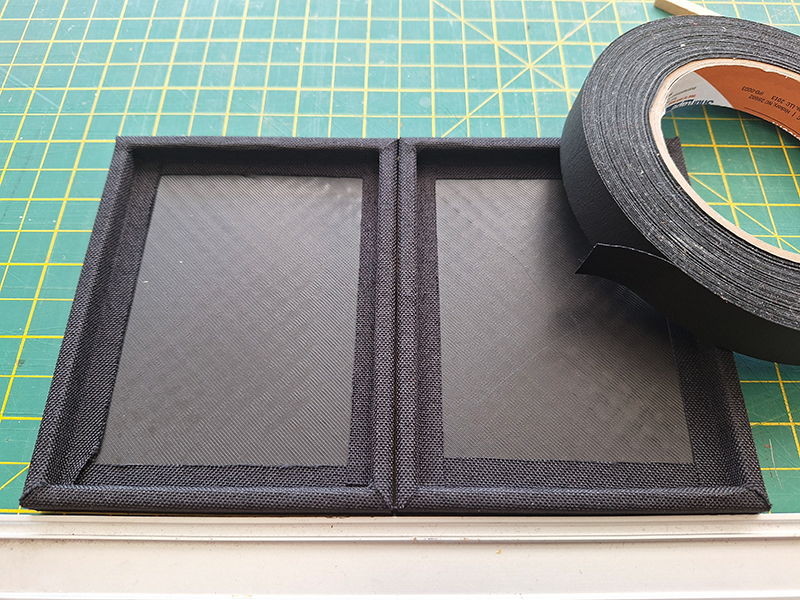
It looks fairly neat, just don’t look too close 🙂
We decided on these small brass closures, as hook and eye clasps at the authentic and suitable size just aren’t available.
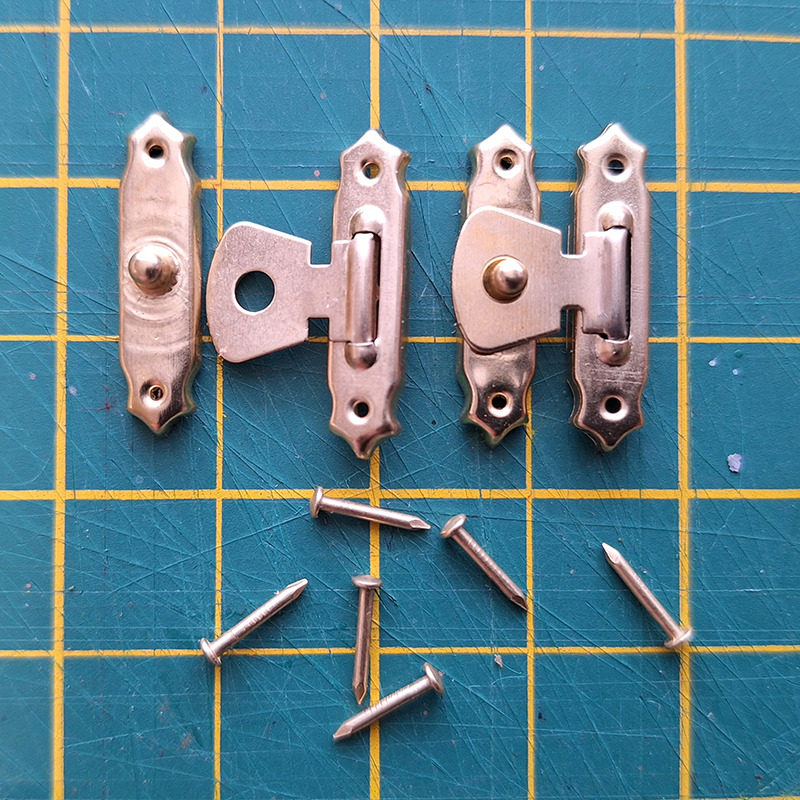
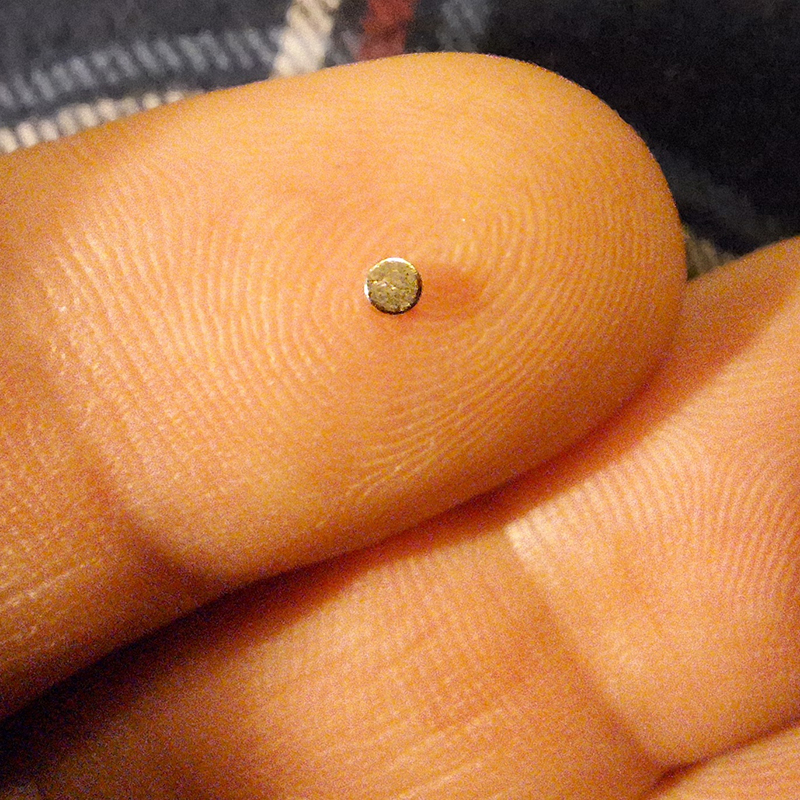
These brass clasps come with small brass tacks, which are just a bit too long and protrude out through the 3D wall inside the case. The use of a bradawl or a punch and a small hammer easily introduces them into the PLA plastic without any splitting. Sadly, I found most of mine too loose, and the risk of them falling out was a concern.
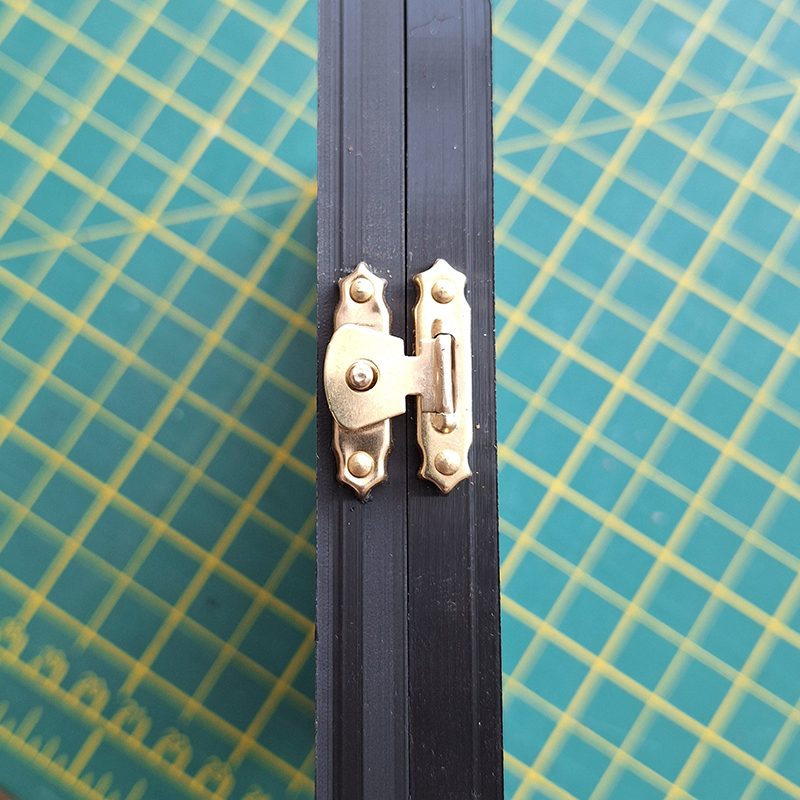
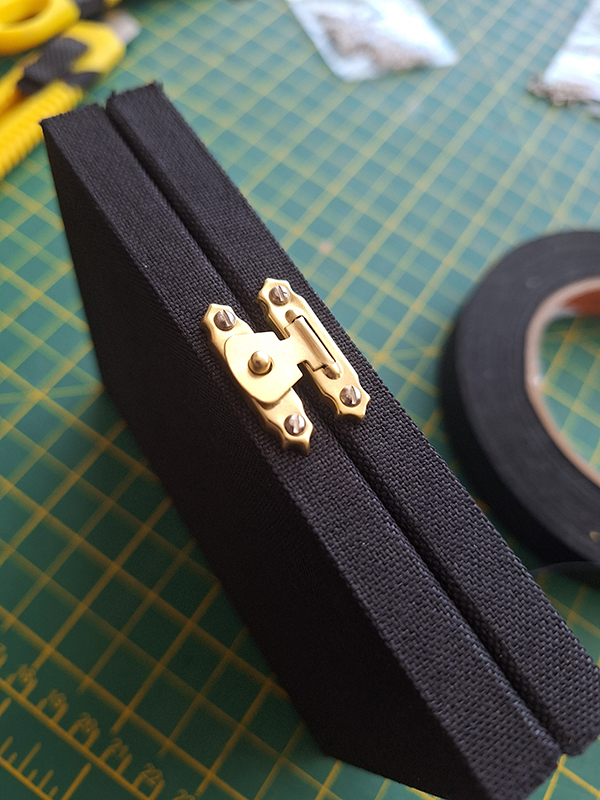
I found four very small round head wood screws in my tool box. Only four, so we managed to source some old stock on Ebay and bought enough for the near future. The screws feel more reassuring.
I had originally toyed with a more modern closure using 2x1mm magnets. They are super strong when stuck together on their own but once introduced into the printed case they were very weak. And yes, I made sure they were the correct way round. It would have been a little fiddly getting this right for every case, so we went down the brass locking clasp route.
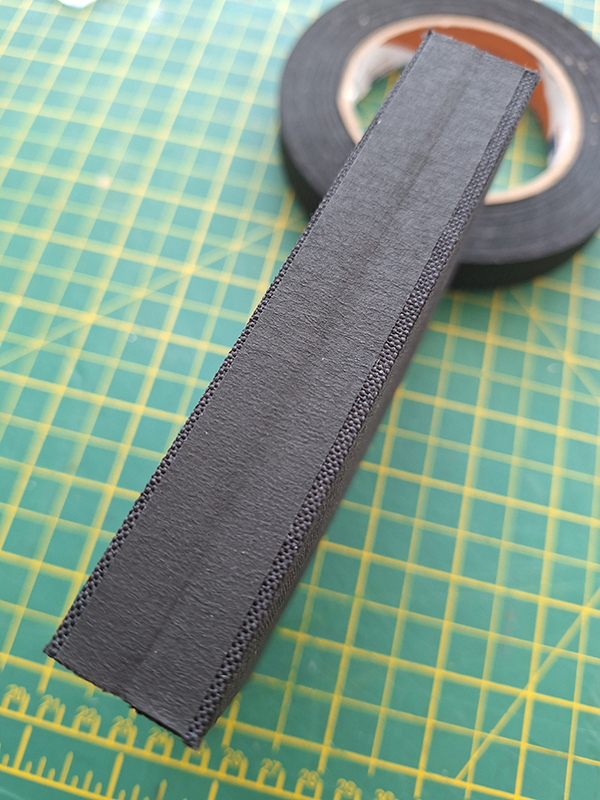
As for hinges, again cost, availability and fitting of very small brass hinges was problematic, and we were looking for an easy option after all. I do have many examples of taped original frames. Double taped versions seem to last very well, so taped inside and out. Here we’ve used book binding paper tape, very sticky and strong.
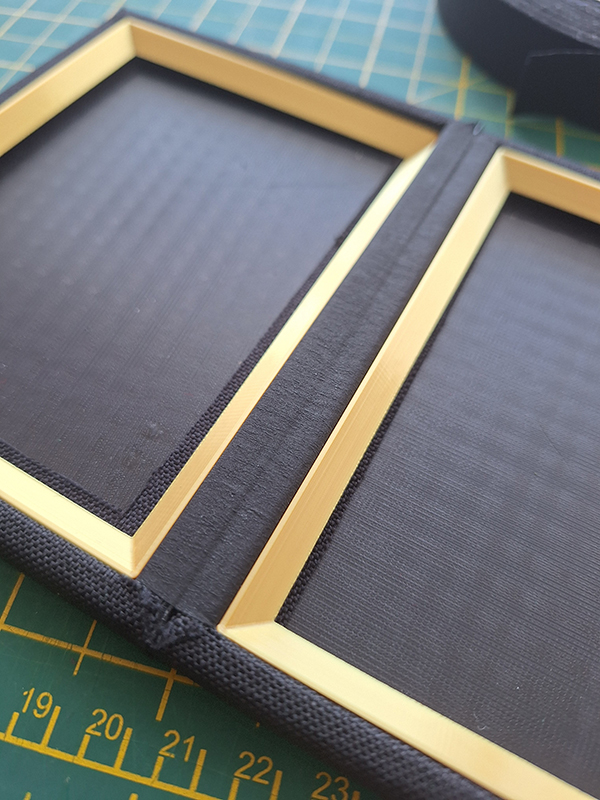
Getting it straight is the biggest challenge but with a bit of practice and patience it works.
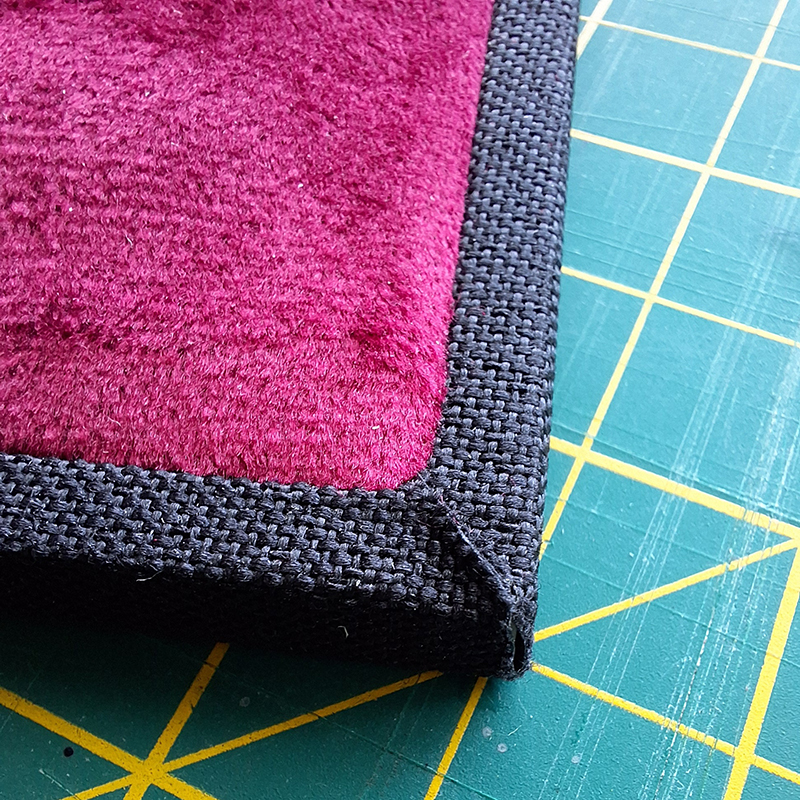
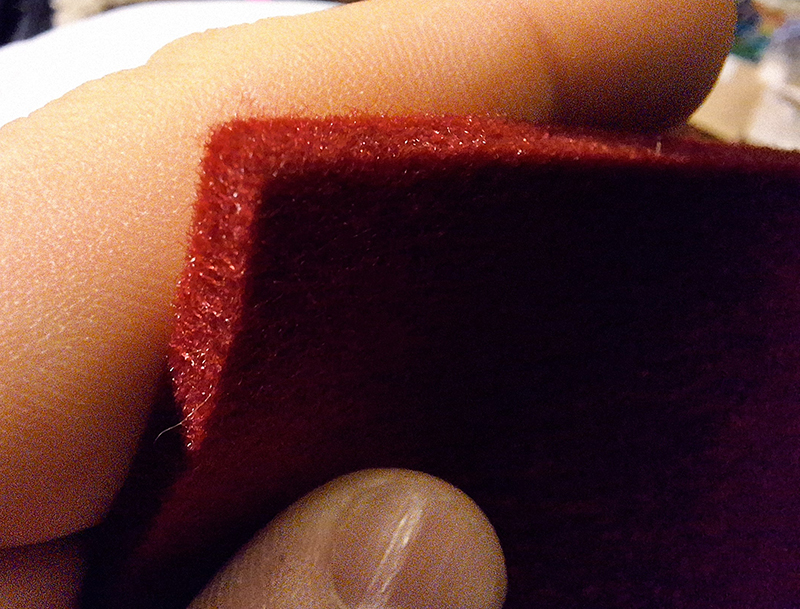
We had tried felt and velvet for cushions and borders. The border here is 4mm felt. I hoped I could use it cut thinly, as a border, and maybe emboss it for the pillow.
It was very fiddly to cut straight, even with a fabric circular blade, and although I liked the look, it was proving a bit fiddly. So I looked again at the velvet.
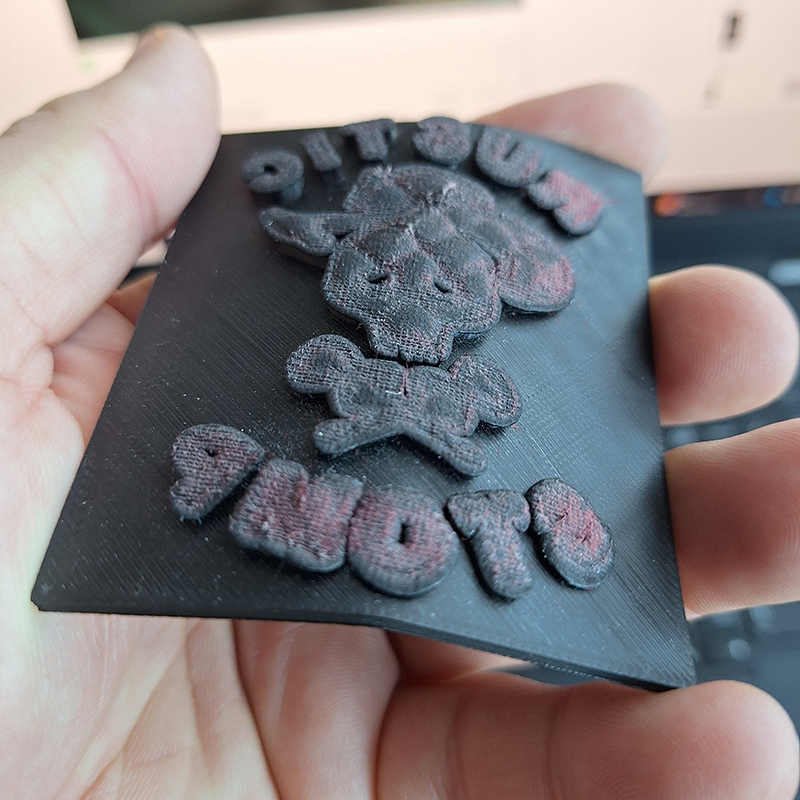
Sadly, when testing the one piece of velvet I had for embossing, I managed to melt it and the template with the clothes iron. I think a cooler temperature is called for.
This embossed felt test was steamed and pressed in a book nipping press, it sort of worked but with uneven pressure/results.
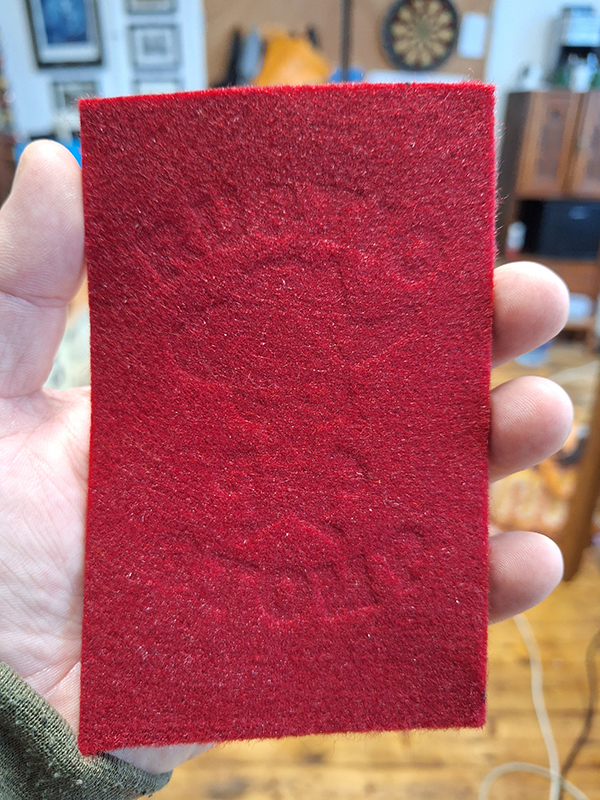
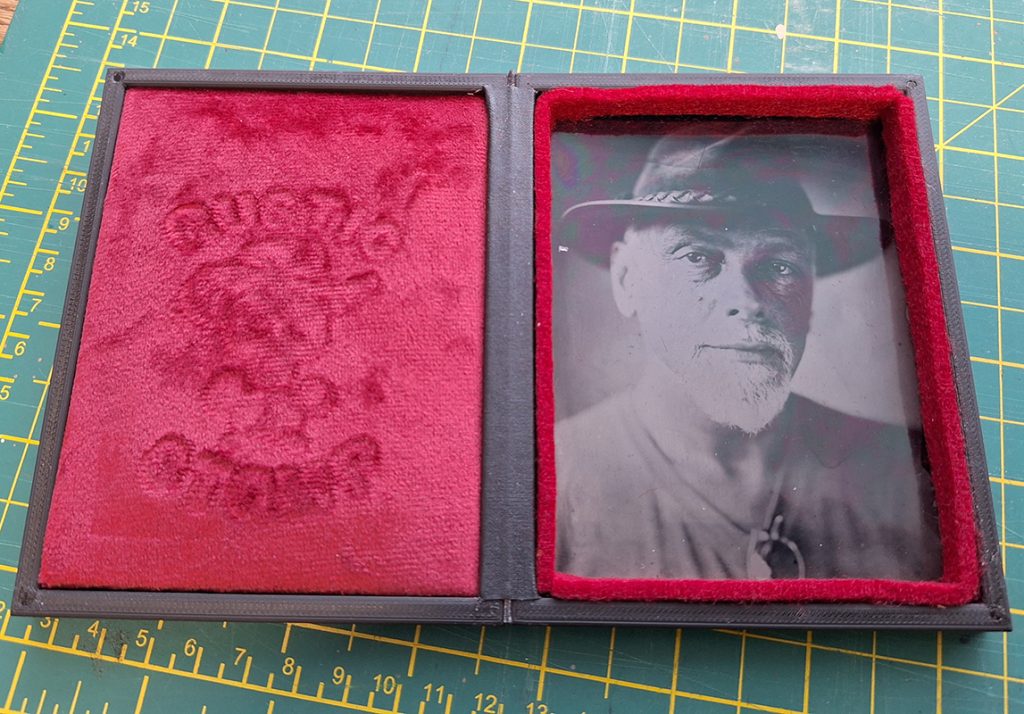
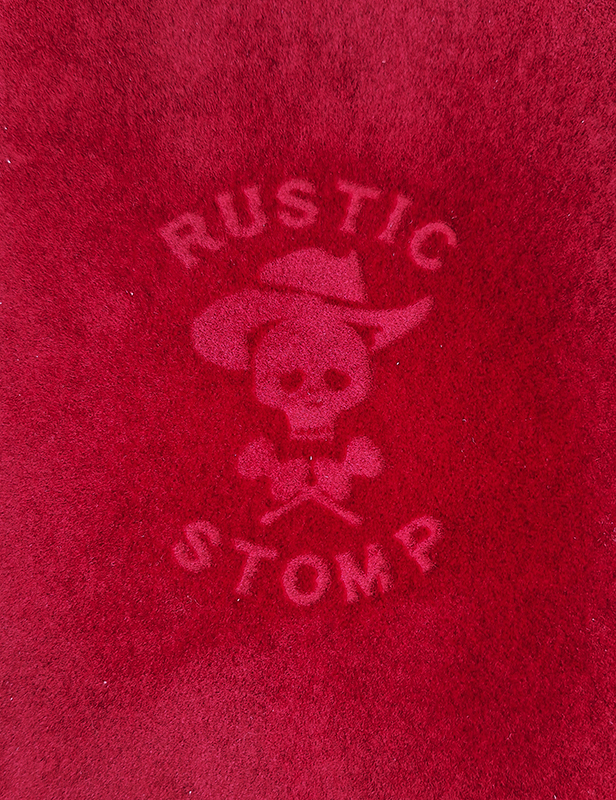
Moo Pa had good success with a thinner self adhesive velvet flock. Medium temperature and 30 seconds or so with a clothes iron. Looks really good. Although we got rid of the smaller text in later versions. The Rustic Stomp logo is for a festival were are attending as a pop up tintype studio in the summer.
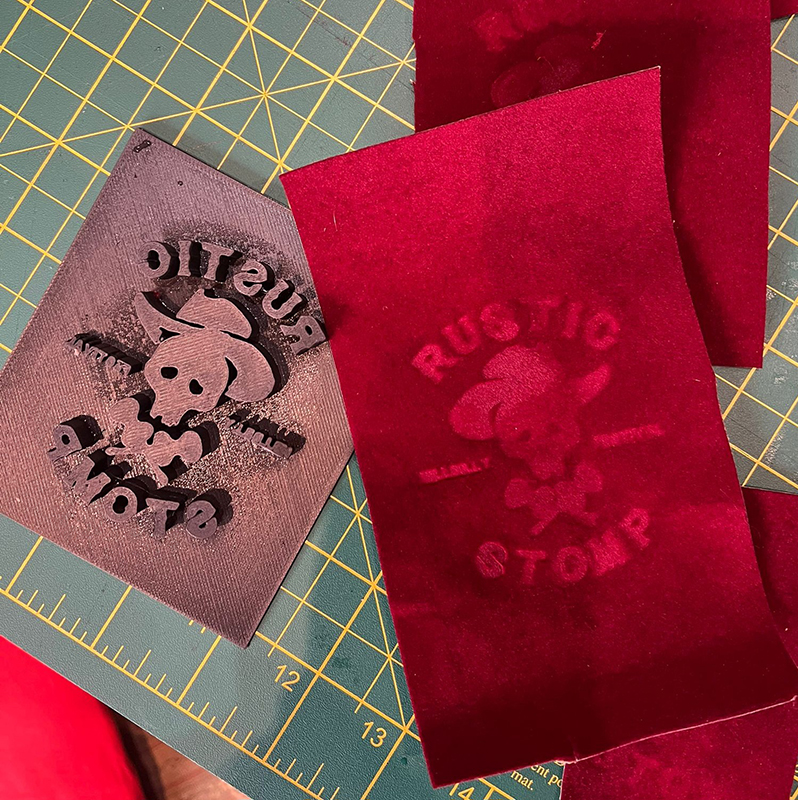
Being concerned about melting my 3D printed template, Kevin at Cobalt Creations at Leigh Spinners Mill laser cut me a wooden version.
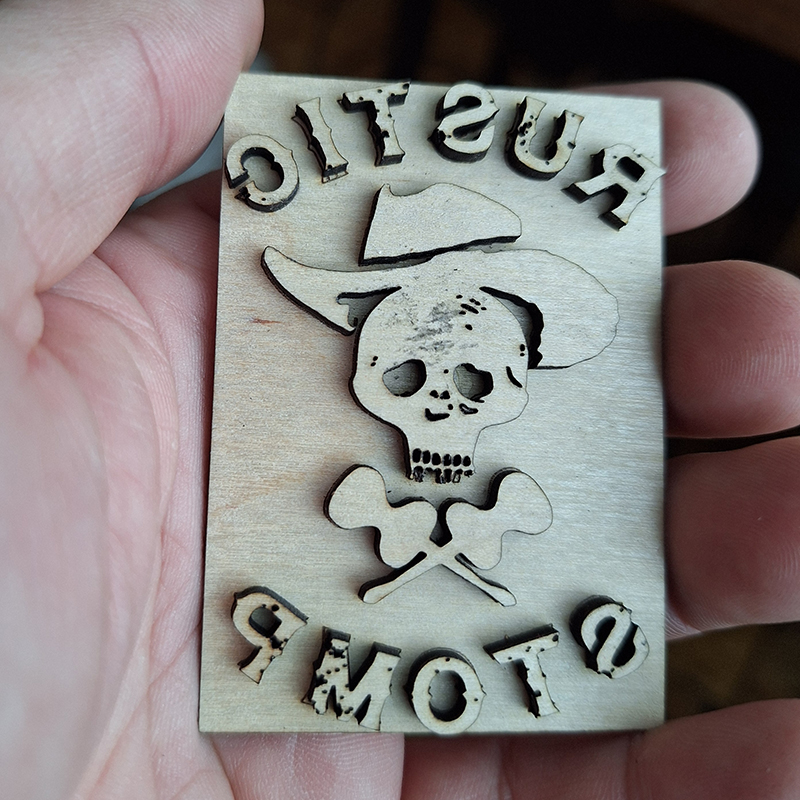
This worked perfectly. Thanks Kevin.
To hold the plate in the case, usually there is a velvet border that friction holds the plate, glass and preserver. As ours are 3D printed, it was fairly straightforward to fashion some inserts and tweak them allowing for the additional bookbinding paper thickness. We can’t believe how well this works.
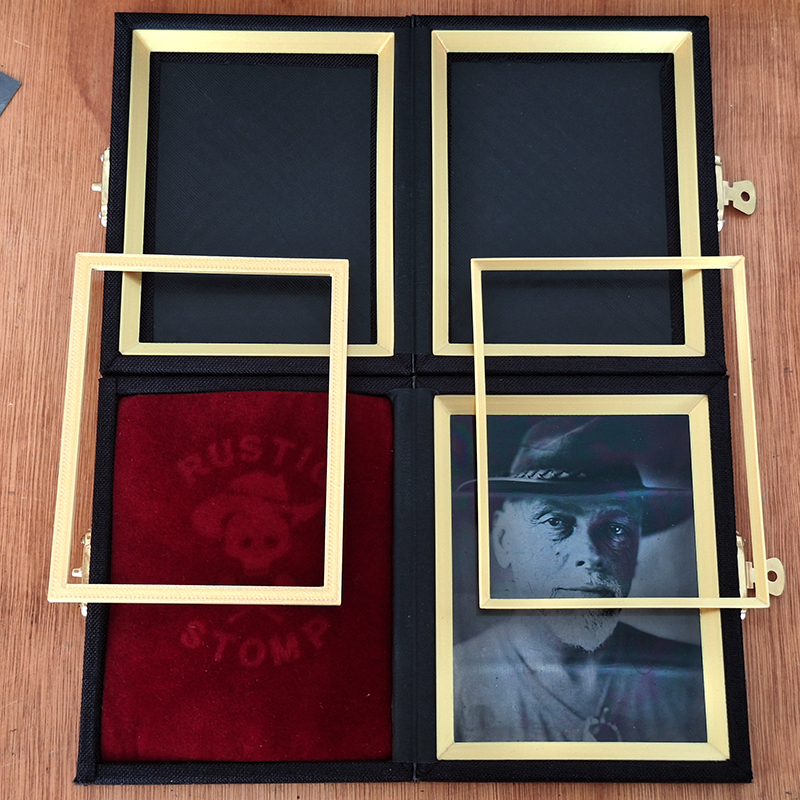
Here are three different versions, one flat (the print bed texture adds to it) and two chamfered at different sizes. Originally printed in black PLA and then swapped out for “gold”.
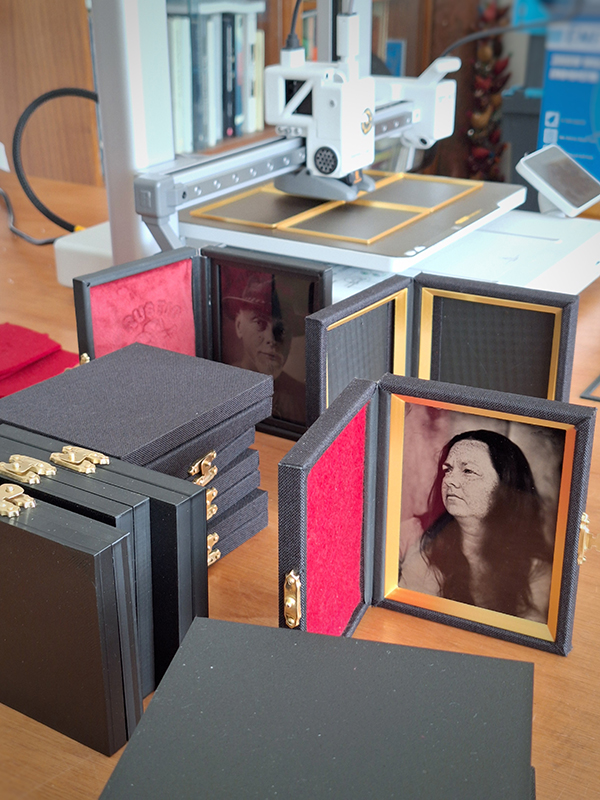
Now it’s just a case of a production line. Whilst the 3D cases are being printed, about an hour, we can fully assemble two or three others at leisure.
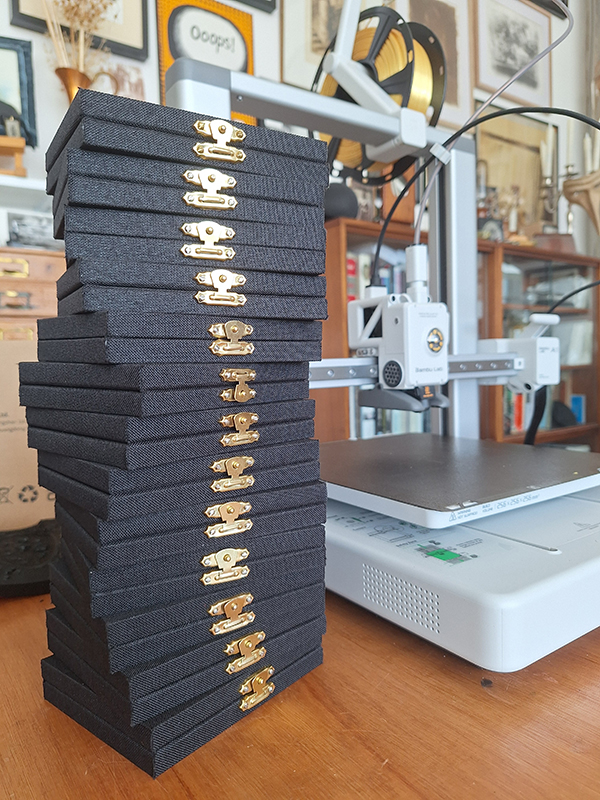
I’m up to 14 finished cases so far. How about you Moo?
Oh, and that original hard case I 3D scanned. I did print it but sadly I didn’t include enough supports and it printed like a banana. Oops. I didn’t like the print lines and time it took to print anyway.
Let us know any other suggestions, or where to find original tiny hook and eye clasps etc. Do we add gold embossing/gilding?
EDIT: These are 1/4 plate size.
Cheers and thanks for reading,
Tony and Moo Pa.
Superb!